
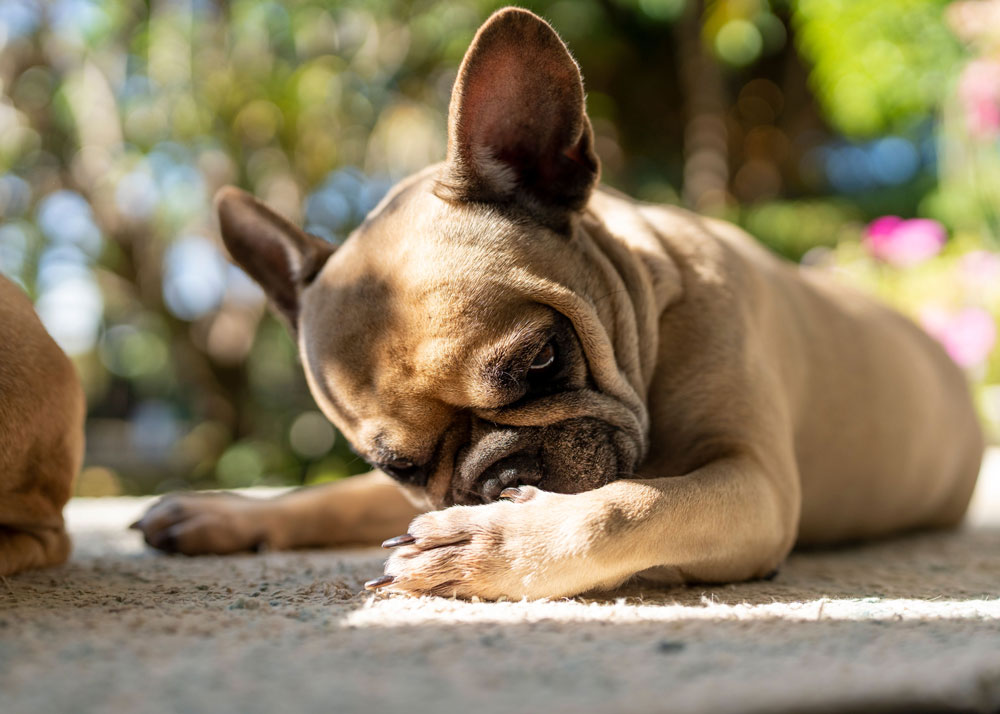
If you’ve ever noticed your dog constantly licking, chewing, or biting at their paws, you’re not alone. So what causes your dog’s paws to Itch?Itchy paws are one of the most common concerns among pet owners—and while it may seem like a minor irritation, it can sometimes signal a deeper health issue.
Understanding why your dog’s paws are itchy is the first step toward helping them feel comfortable again. In this article, we explore the most common causes, how to recognise the signs, and what you can do to provide relief.
Signs Your Dog’s Paws Are Itchy
Before diving into causes, it’s important to recognise the symptoms. Dogs can’t tell us when something is wrong, so their behaviour becomes the clue.
Common signs include:
- Excessive licking or chewing of paws
- Red, inflamed skin between the toes
- Brown staining from saliva
- Limping or favouring one paw
- Swelling or tenderness
- Unusual odour from the paws
- Cracked or dry paw pads
Some dogs may focus on one paw, while others lick all four. This detail can help narrow down the cause.
1. Allergies – The Most Common Cause
Allergies are by far the leading reason dogs develop itchy paws.
Just like humans, dogs can be sensitive to a variety of triggers, including:
Environmental Allergies
These include pollen, grass, dust mites, and mould. Dogs often develop seasonal itching, especially during spring and summer.
Food Allergies
Certain proteins or ingredients in your dog’s diet can trigger ongoing irritation. Unlike seasonal allergies, food allergies tend to cause year-round symptoms.
Flea Allergies
Some dogs are hypersensitive to flea saliva—even a single bite can trigger intense itching.
What to look for:
- Itching across multiple paws
- Ear infections
- Red, irritated skin elsewhere on the body
- Sneezing or watery eyes
If your dog’s itching seems persistent or widespread, allergies are a likely culprit.
2. Bacterial Skin Infections
When dogs lick their paws excessively—often due to allergies—it can damage the skin barrier. This creates the perfect environment for bacteria to grow.
These infections (commonly referred to as pyoderma) can quickly worsen if left untreated.
Symptoms include:
- Red, inflamed paws
- Swelling and tenderness
- Pus or discharge
- A strong, unpleasant smell
Unfortunately, the itch-scratch cycle continues: the more your dog licks, the worse the infection becomes.
3. Yeast (Fungal) Infections
Yeast infections are another common cause of itchy paws, especially in warm, moist environments.
Dogs that swim frequently or live in humid conditions are more prone to developing these infections. Areas between the toes are particularly vulnerable because they trap moisture.
Key signs:
- A musty or “cheesy” smell
- Greasy or moist skin
- Redness between toes
- Persistent licking
Yeast infections often occur alongside allergies, making diagnosis and treatment a bit more complex.
4. Dry, Cracked, or Irritated Paw Pads
Sometimes, the cause of itchy paws is as simple as environmental irritation.
Your dog’s paws are exposed to the elements every day, and certain conditions can cause dryness or damage:
- Hot pavement in summer
- Cold surfaces or ice in winter
- Sand or rough terrain
- Chemical irritants (like cleaning products or lawn treatments)
These factors can lead to cracked, dry, or inflamed paw pads—similar to chapped skin in humans.
Signs to watch for:
- Dry or flaky pads
- Cracks or bleeding
- Sensitivity after walks
Dogs may lick their paws in an attempt to soothe the discomfort.
5. Foreign Objects (Grass Seeds, Thorns, Debris)
If your dog suddenly starts obsessively licking one paw, a foreign object could be the cause.
Grass seeds, thorns, burrs, or small stones can become lodged between the toes or in the paw pads.
These objects can cause:
- Immediate irritation
- Swelling and pain
- Limping
- Infection if left untreated
This is especially common after walks in grassy or bushy areas.
6. Parasites
External parasites such as mites or fleas can also lead to itchy paws. While fleas are more commonly associated with itching around the tail and back, some dogs react by licking their feet.
Mites, on the other hand, can directly affect the paws and cause intense irritation.
7. Behavioural Causes (Over-Grooming)
Not all paw licking is caused by a physical issue. In some cases, it can be behavioural.
Dogs may lick their paws due to:
- Anxiety
- Stress
- Boredom
This is similar to nail-biting in humans. While it may start as a coping mechanism, excessive licking can still lead to skin damage and secondary infections.
How to Help Your Dog at Home
For mild cases, there are a few simple steps you can take to provide relief:
Keep Paws Clean
Wipe your dog’s paws after walks to remove allergens and irritants.
Regular Grooming
Trim hair between the toes to reduce moisture build-up.
Paw Balms
Moisturising balms can soothe dry, cracked paw pads.
Bathing
A gentle, vet-approved shampoo can help remove allergens and calm irritated skin.
Nutrition Support
Omega-3 fatty acids can improve skin health and reduce inflammation.
When to See a Veterinarian
While home care can help mild irritation, some situations require professional attention.
Contact your vet if:
- Your dog is limping
- The paw is swollen, bleeding, or painful
- There is a strong odour or discharge
- Licking is constant or worsening
- You suspect a foreign object
Veterinarians have access to treatments such as antibiotics, antifungal medications, allergy management plans, and specialised diets.
Why Proper Diagnosis Matters
One of the biggest challenges with itchy paws is that different causes can look very similar. Allergies, infections, and parasites often overlap, and treating the wrong condition can delay healing.
For example:
- Treating a yeast infection with the wrong product may worsen the problem
- Ignoring allergies can lead to recurring infections
- Missing a lodged grass seed can result in serious complications
That’s why a proper diagnosis is essential for long-term relief.
Final Thoughts
Itchy paws may seem like a small issue, but for your dog, it can be incredibly uncomfortable—and even painful if left untreated.
From allergies and infections to environmental irritants and hidden foreign objects, there are many possible causes. The key is to pay attention to your dog’s behaviour, act early, and seek veterinary advice when needed.
With the right care and treatment, your dog can return to happy, comfortable walks—and you can finally enjoy a peaceful, lick-free night.