
Canine Intervertebral Disc Disease (IVDD) in Dogs: What Every Pet Owner Needs to Know
Back pain is something many of us humans can relate to—but did you know that dogs also suffer from serious spinal conditions? One of the most common is intervertebral disc disease (IVDD). While the name may sound technical, IVDD is a condition every dog owner should understand. It can affect dogs of all breeds, sizes, and ages, often with subtle signs that are easy to miss.
In this article, we’ll explore what IVDD is, why it happens, how it presents, and what treatment and prevention options are available.
What Is IVDD?
Think of your dog’s spine as a flexible column of bones called vertebrae, with discs acting as cushions between them. These discs help absorb shock and allow for smooth movement.
In IVDD, those discs start to degenerate. Instead of being soft and springy, the disc material hardens, bulges, or even ruptures. When this happens, the spinal cord and its nerves get compressed. That pressure leads to pain, nerve damage, and in severe cases, paralysis.
Just like humans with herniated discs, dogs with IVDD experience varying degrees of discomfort, from mild stiffness to an inability to walk.
Where IVDD Occurs in the Spine
IVDD can affect different areas of the spine:
-
Cervical spine (neck): Around 15% of disc herniations occur here, often in breeds like dachshunds, beagles, and poodles.
-
Thoracic and lumbar spine (mid-to-lower back): The most common sites are T11–T12 and L2–L3. Pain here can present as reluctance to move, stiffness, or even lameness.
-
Lumbosacral spine (lower back near the tail): Dogs may show weakness in the hind legs, reluctance to wag their tails, or crouching postures.
Causes and Risk Factors
In many cases, there’s no clear “cause” of IVDD. Owners sometimes report a minor fall or a yelp during play, but more often than not, symptoms appear later without an obvious trigger.
Breed predispositions
Some dogs are more prone to IVDD due to genetics, body shape, or bone development:
-
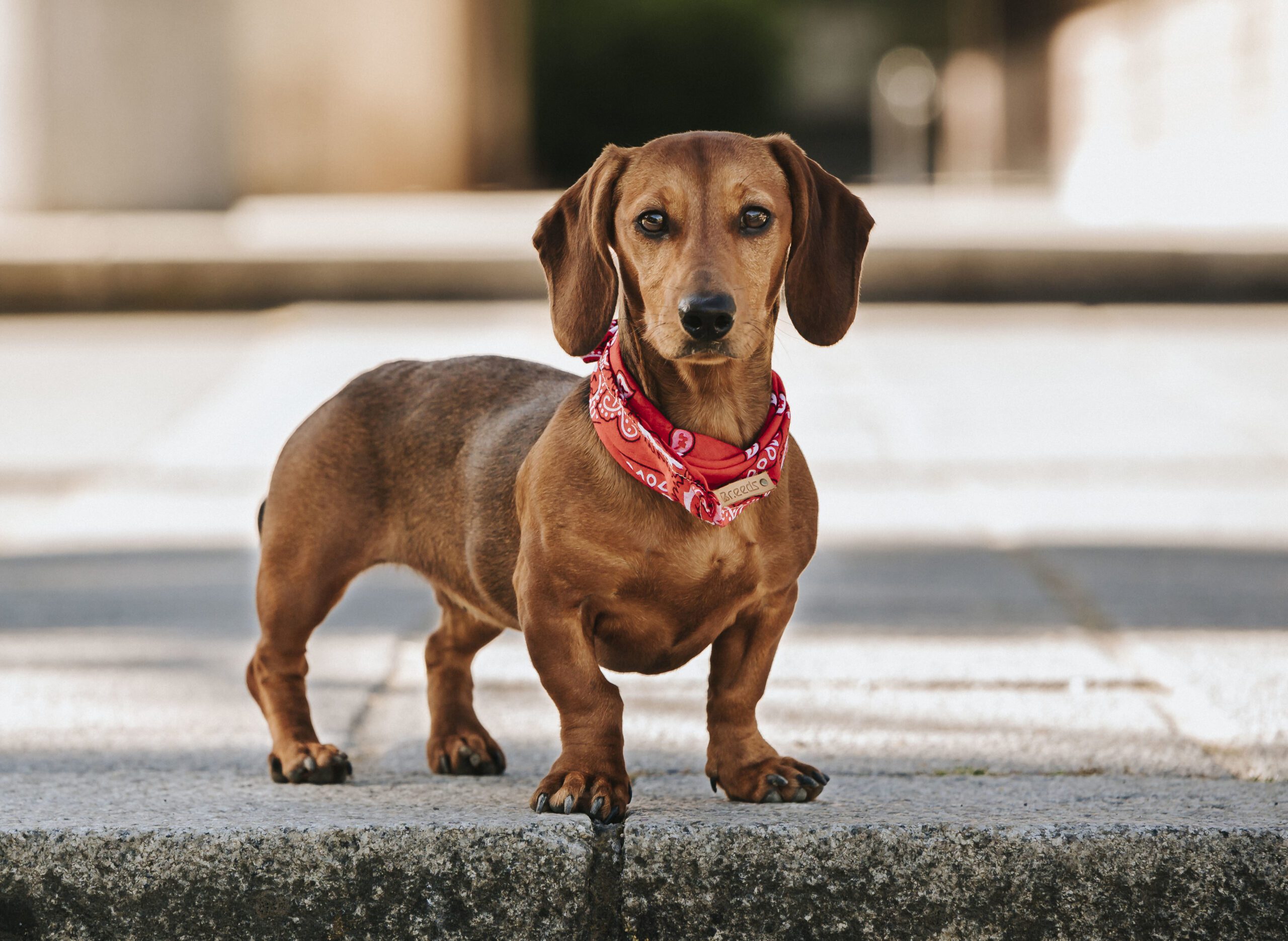
Chondrodysplastic breeds (long backs, short legs): Dachshunds, Basset Hounds, Lhasa Apsos, and Pekingese are high-risk. Their cartilage develops abnormally, making discs more likely to degenerate.
-
Small and medium breeds: Poodles, beagles, and cocker spaniels commonly develop IVDD.
-
Large breeds: German Shepherds, Labradors, and Dobermans are also affected, often later in life.
Age
While IVDD can strike at almost any age, it’s most commonly seen in middle-aged dogs (3–7 years) and again in seniors (12+ years).
Types of IVDD
Veterinarians classify IVDD into three main types:
-
Hansen Type I: Sudden disc rupture, usually in younger dogs and chondrodystrophic breeds like dachshunds.
-
Hansen Type II: Slow, age-related disc degeneration, typically in larger or older dogs.
-
Hansen Type III: Traumatic disc herniation, where disc fragments are expelled into the spinal cord after sudden impact.
Clinical Signs: What Owners May Notice
Dogs rarely show pain the way humans do. Instead, their discomfort can look like:
-
Hesitation to jump on furniture or climb stairs
-
Reduced interest in play or walks
-
Low energy or changes in behavior
-
Hunched posture or stiff movement
-
Holding the tail low or not wagging normally
In more advanced cases, dogs may show neurologic symptoms, such as:
-
Weakness or paralysis in one or more legs
-
Stumbling or dragging a limb
-
Crossing legs while walking
-
Sudden loss of coordination
One important note: lack of crying or whining does not mean a dog isn’t in pain. Some breeds, like pit bulls, are famously stoic, while others, like huskies, may overreact to minor discomfort.
Diagnosis
A thorough veterinary exam is the first step. Your vet may recommend advanced imaging such as MRI, CT scans, or myelograms to confirm the diagnosis, especially if surgery is considered.
Treatment Options
Treatment depends on the severity of the case.
Conservative management
For mild cases without neurologic deficits:
-
Strict rest for 2–4 weeks (leash walks only)
-
Pain management with medications such as gabapentin, NSAIDs, or codeine
-
Supportive care such as massage, laser therapy, or acupuncture
Surgery
In severe cases—especially when paralysis or loss of function is present—surgery may be necessary to remove the compressed disc material and relieve pressure on the spinal cord. Post-surgical rehabilitation is essential for recovery.
Rehabilitation and holistic therapies
Adjunctive treatments can significantly improve quality of life:
-
Hydrotherapy (underwater treadmill or swimming)
-
Physical therapy and controlled exercises
-
Laser light therapy to reduce inflammation
-
Osteopathic or chiropractic care
-
Acupuncture and ultrasound therapy
The Role of Canine Osteopathy
Osteopaths often see dogs when owners know “something isn’t right” but can’t pinpoint the problem. Through gait analysis, palpation, and manual therapy, osteopaths can identify pain points and work alongside veterinarians to create a treatment plan.
Their role includes:
-
Providing pain relief through manual therapies
-
Guiding owners on rest and safe exercises
-
Teaching owners how to spot worsening signs
-
Supporting rehabilitation after surgery
While osteopaths can’t formally diagnose IVDD, they are an important part of a multi-modal care team.
Prognosis
Recovery from IVDD varies. Some dogs return to full mobility, while others experience relapses or ongoing limitations. Key factors that influence outcomes include:
-
How quickly treatment begins
-
Severity of neurologic deficits
-
Owner compliance with rest and restrictions
-
Access to rehabilitation therapies
Roughly one-third of dogs may have a recurrence later in life, making ongoing management critical.
Prevention and Lifestyle Management
While IVDD cannot always be prevented, owners can reduce risks and improve outcomes by:
-
Maintaining a healthy weight – Excess weight strains the spine.
-
Providing regular, low-impact exercise – Controlled walks are better than rough play.
-
Preventing jumping and rough landings – Use ramps or steps to access furniture.
-
Avoiding tug-of-war or “begging” positions – These strain the spine.
-
Using a harness, not a neck collar – Prevents jarring pulls on the spine.
Orthopedic beds, restricted stair use, and client education handouts also help reduce the risk of flare-ups.
Final Thoughts
IVDD is a complex but common spinal disorder in dogs. Its signs can be subtle, ranging from hesitation to jump to full paralysis. With early detection, appropriate treatment, and ongoing management, many dogs live happy, active lives despite the disease.
The most important takeaway? If your dog shows unusual stiffness, reluctance to move, or changes in gait, don’t ignore it. Seek veterinary advice immediately.
A team-based approach—including veterinarians, surgeons, rehabilitation specialists, and osteopaths—offers the best chance for recovery and quality of life.